How did salmon become an everyday fish?

Not long ago, salmon was seasonal. Today, industrial ocean farming has made it abundant everywhere, all year. But that abundance comes at a cost to wild salmon and the ocean ecosystems around them.

Should this much salmon be on every table — at such a tremendous cost?

Join leading chefs calling on restaurants around the world to take ocean-farmed salmon off the table.

Founding signatories include
    Francis Mallmann
    Alice Waters
    Dan Barber
    Joan Roca
    Narda Lepes
    Mauro Colagreco
    Virgilio Martínez
    Micha Tsumura
    Massimo Bottura
    Ana Roš
    Ángel León
    Michael Cimarusti
    Gabriela Cámara
    Norbert Niederkofler
    Enrique Olvera
    Jeremy Charles
    Ignacio Mattos
    Brandon Jew
    Sam Kass
    Magnus Nilsson
    Grant Achatz
    Daniel Patterson
    Pia León
    Suzanne Goin
    Darina Allen
    Jaime Pesaque
    Hugh Fearnley-Whittingstall
    Michael Tusk
    David Barzelay
    Þráinn Freyr Vigfússon
    Riad Nasr
    Lee Hanson
    Dário Costa
    Antonia Klugmann
    Sally Clarke
    Jose Luis Hinostroza
    Cristina Martínez
    Mary Sue Milliken
    Drew Deckman
    Gísli Matthías Auðunsson
    Gunnar Karl Gíslason
    Renee Erickson
    António Galapito
    Manu Buffara
    Jaime David Rodríguez Camacho
    Mark Bittman
    François-Emmanuel Nicol
    Elena Reygadas
    Dominique Crenn
    Jessica Rosval
    Rasmus Kofoed
    Eric Robertson
    Josh Niland
    See the full list
    Count-down
    Are you a chef? Join us by adding your name to the open letter.
    JOIN THE CHEFS TAKING A STAND
    Video Cover

    See an exclusive clip from SUPERFISH: SALMON, the new film from celebrated Blue Planet filmmaker and marine biologist Rick Rosenthal.

    “Abundance” comes at a heavy cost.

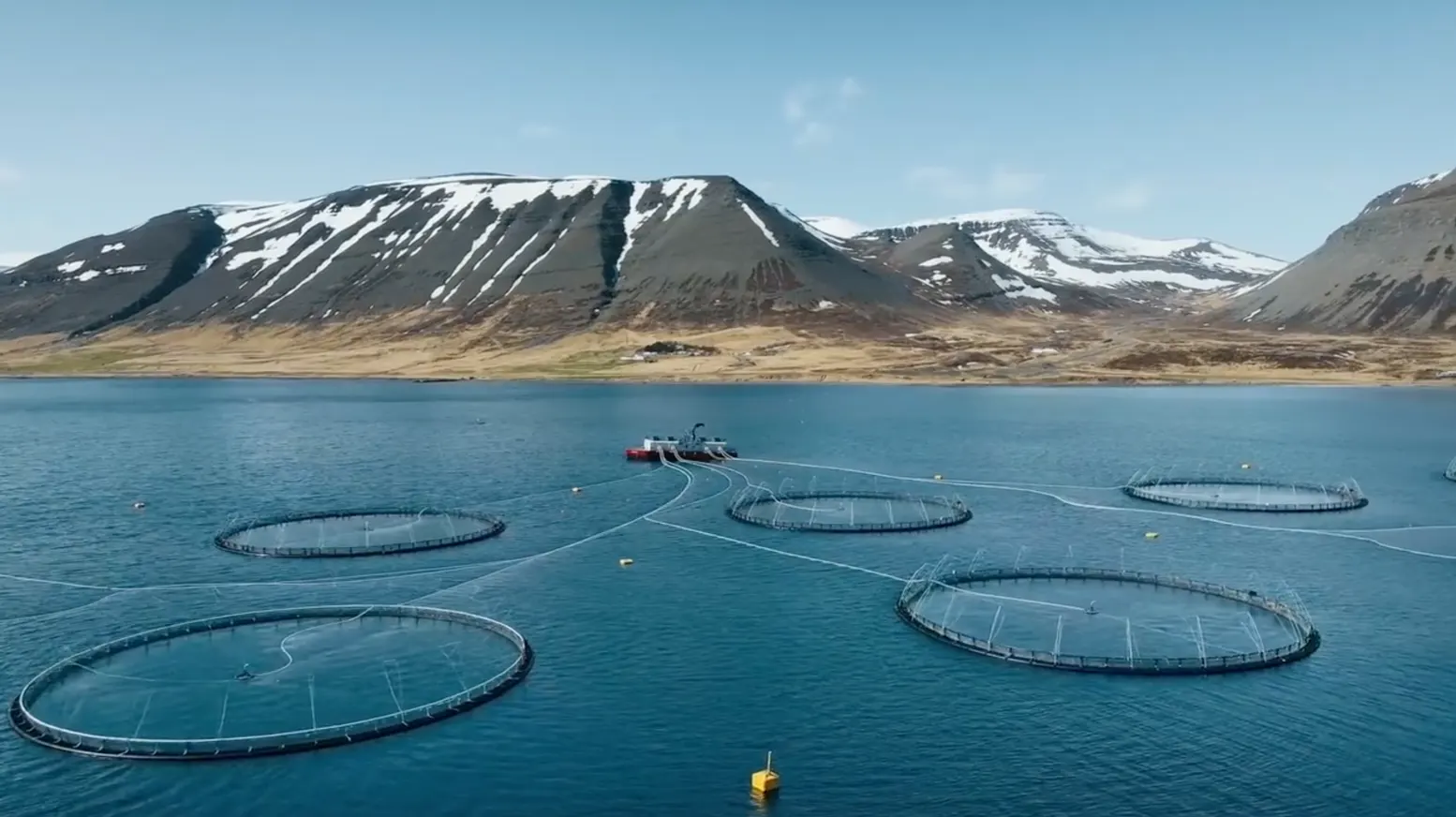
    At any given time, an estimated 650 million ocean-farmed salmon are being raised around the world.

    Wild salmon could never — and should never — satisfy demand on that scale.

    Ocean farming has made salmon ubiquitous and cheap by using our coastal waters as a free sewer for large-scale sea cages. 
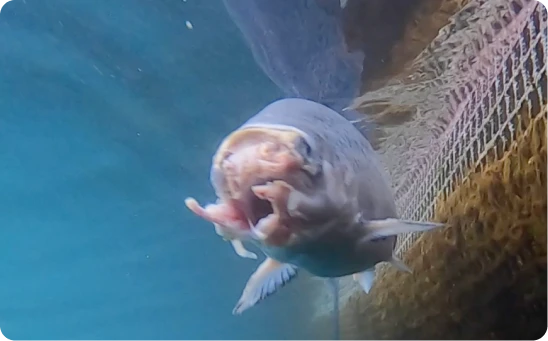
    What happens in the cage doesn't stay in the cage.

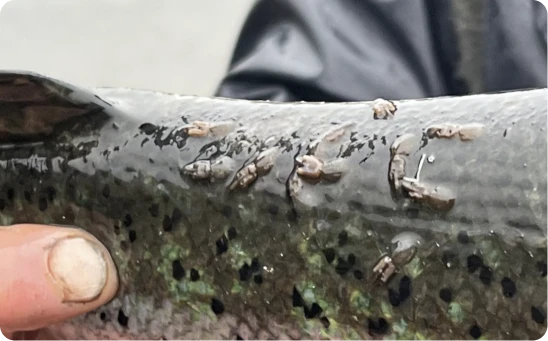
    Sea lice & disease

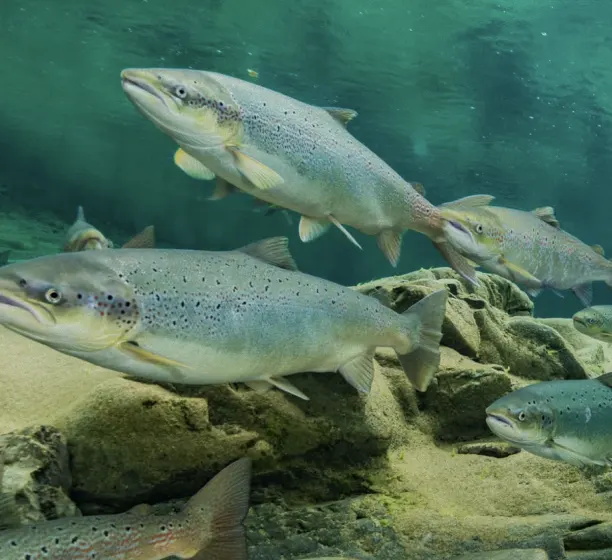
    Parasites1 and disease2 concentrate in cages and spread to wild fish nearby.

    Escapes

    Farmed fish escape and can interbreed with wild salmon, weakening already fragile populations.3
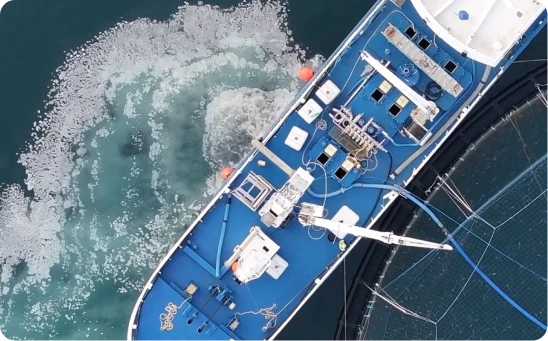
    Pollution

    Waste, excess feed, pesticides, microplastics, antibiotics, and other treatments flow freely into surrounding waters.4,5,6
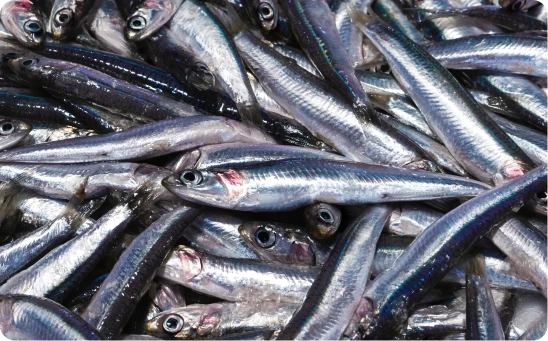
    Wild fish for feed

    Feeding one ocean-farmed salmon takes more than 400 smaller wild fish — fish that could otherwise feed vulnerable people in low-income countries.7,8  
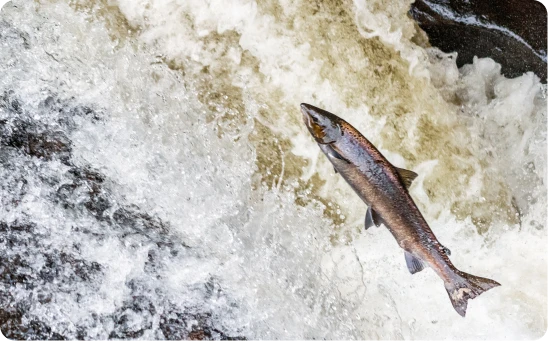
    Extinction

    Farming salmon in the ocean is a leading cause of the decline and collapse in wild Atlantic salmon populations.9

    Meanwhile, only 2.5 million wild Atlantic salmon remain —following an 80% decline since 1974.10 The abundance on our plates can hide what is disappearing in the wild.

    “But my salmon is sustainably farmed.”

    Some farms are better managed than others. Better practices matter. But every ocean farm shares one basic characteristic: the cage is open to the sea.

    Parasites, disease, escaped fish, waste, and pollution cannot be fully contained at the farm boundary. And labels such as “responsibly raised,” “organic," and “ocean-raised” — or references to pristine places like the Faroe Islands, Loch Duart, or New Zealand — do not change the underlying production system.

    So perhaps the better question isn't which ocean-farmed salmon is best, but does salmon need to be an everyday ingredient at all?
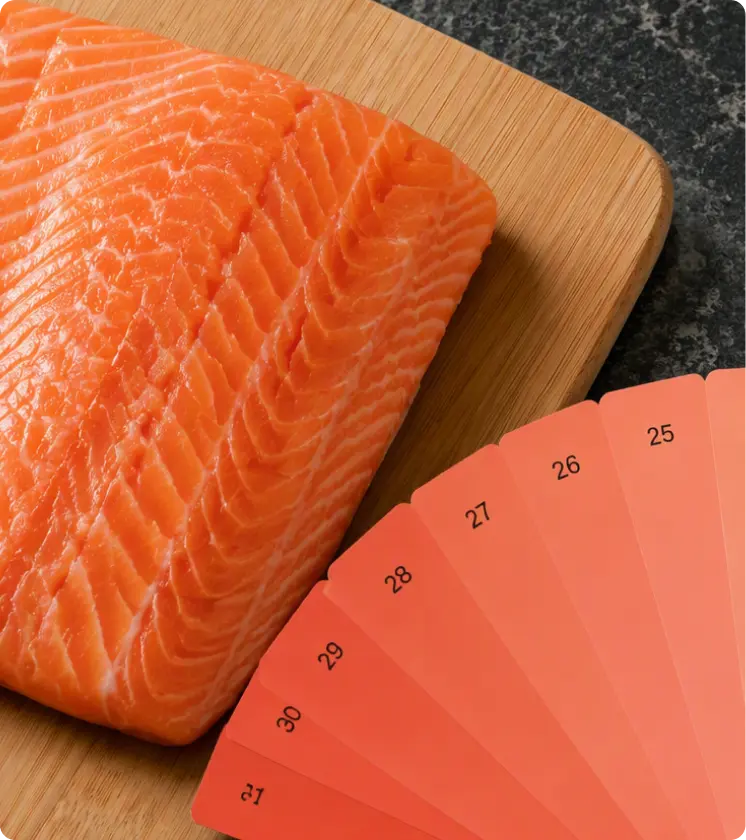
    Synthetic astaxanthin derived from petrochemicals dominates with about 95% of the market share for aquaculture.12,13
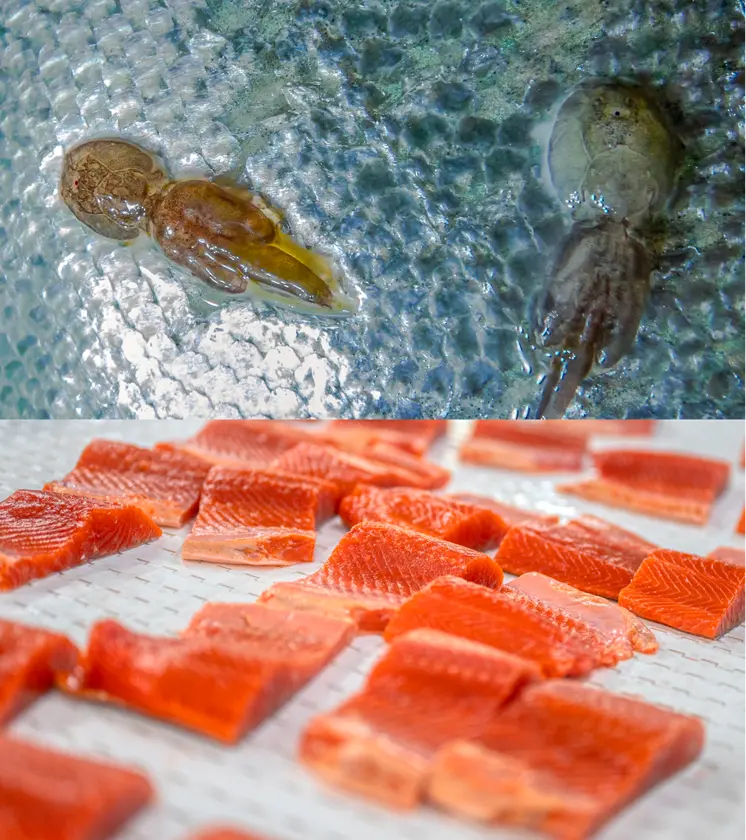
    Norway’s own scientists rank salmon farming as the #1 human-caused threat to wild salmon.11
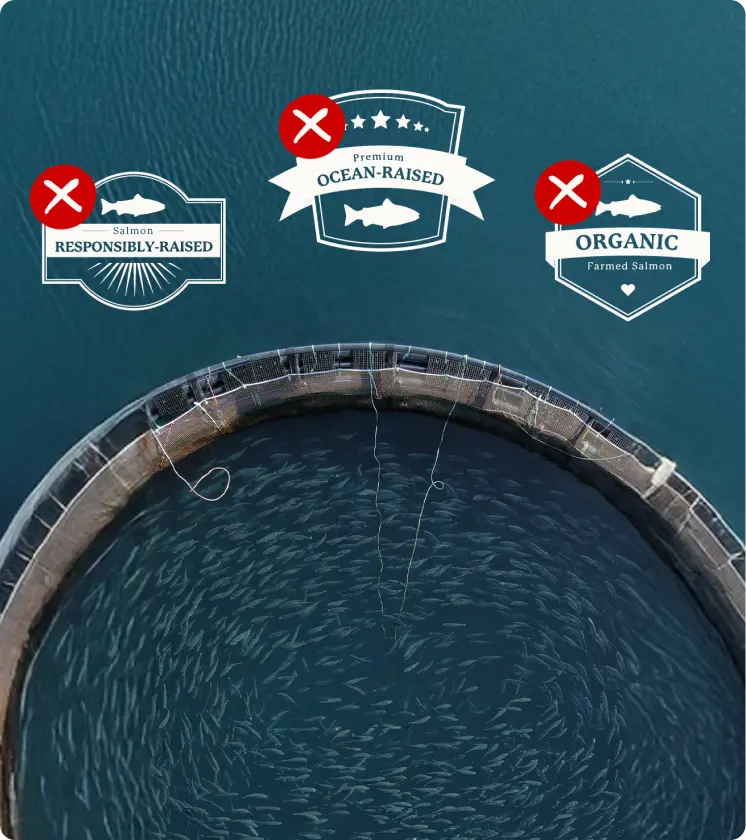
    "Responsibly-raised" can mean very different things. "Ocean-raised" doesn't mean healthy, sustainable, or good for the environment. "Organic" — the USDA doesn't set standards for organic salmon farming.
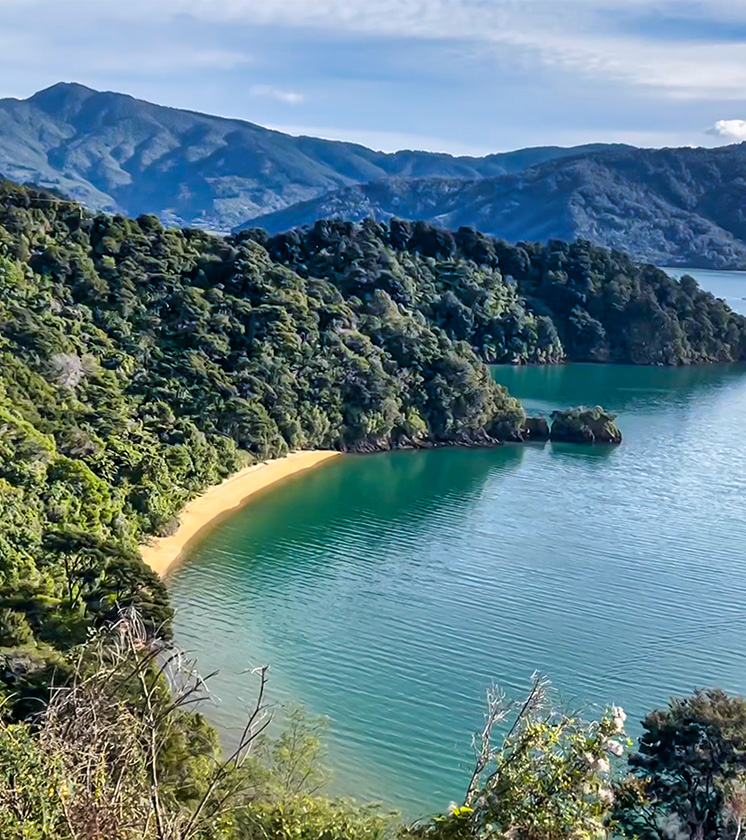
    In New Zealand, King Salmon’s Blue Endeavour project is placing open ocean pens in Cook Strait, a pristine deepwater environment.

    There are many alternatives.

    Wild Pacific salmon is great when in season, and land-farmed salmon is another alternative, but there are many options besides salmon.

    Exceptional menus don’t need
    ocean- farmed salmon

    See how chefs are finding alternatives that keep plates flavorful,vibrant and equally coveted by diners.
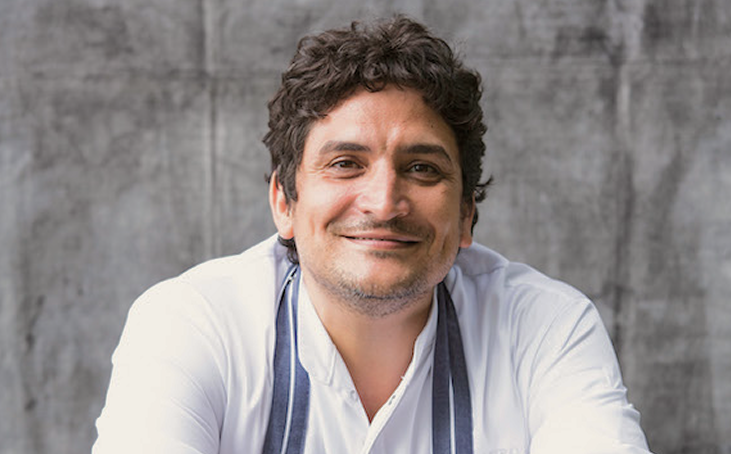
    Mauro Colagreco
    Raffles Hotel

    Mauro Colagreco, chef-proprietor of the three-Michelin-starred Mirazur (The World’s Best Restaurant 2019), uses sustainable land-farmed smoked trout in place of smoked salmon for breakfast and brunch at his restaurant in London's Raffles Hotel.

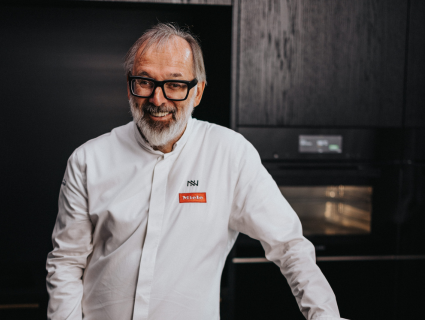
    Norbert Niederkofler
    Atelier Moessmer Norbert Niederkofler

    Chef Norbert Niederkofler’s Cook the Mountain philosophy is deeply rooted in the Alpine landscape of South Tyrol in the Italian Dolomites. At his restaurant Atelier Moessmer Norbert Niederkofler in Brunico, awarded three Michelin stars and a Green Star, local freshwater fish plays an important role in expressing seasonality, proximity and respect for the territory.

    The cuisine often focuses on species that are not considered “luxury” fish or have gradually disappeared from the spotlight. By giving them new value and attention, Atelier Moessmer turns local freshwater fish into an authentic expression of South Tyrol and its culinary identity.

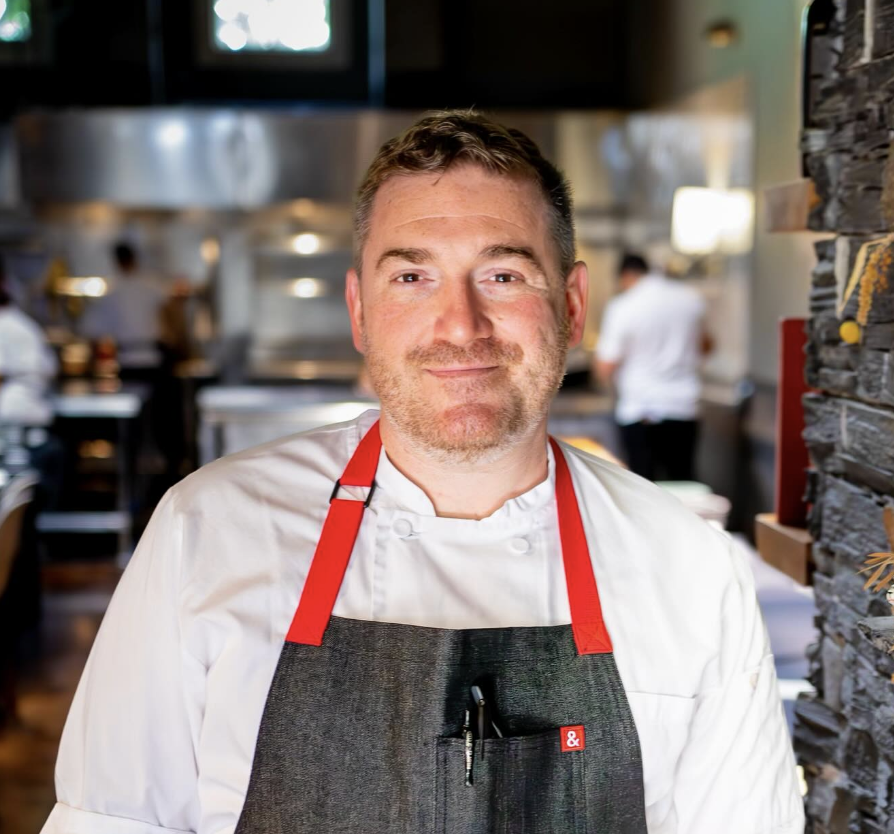
    David Barzelay
    Lazy Bear

    At 2-Michelin-starred Lazy Bear in San Francisco, Chef/Owner David Barzelay takes pride in serving locally farmed trout and steelhead, indigenous fish raised in their native waters. Barzelay points to the fish’s superb color, flavor, and texture, but also to the sense of place it brings, saying “I don’t think people want the same generic fish flavor no matter where and when they dine in the world.”

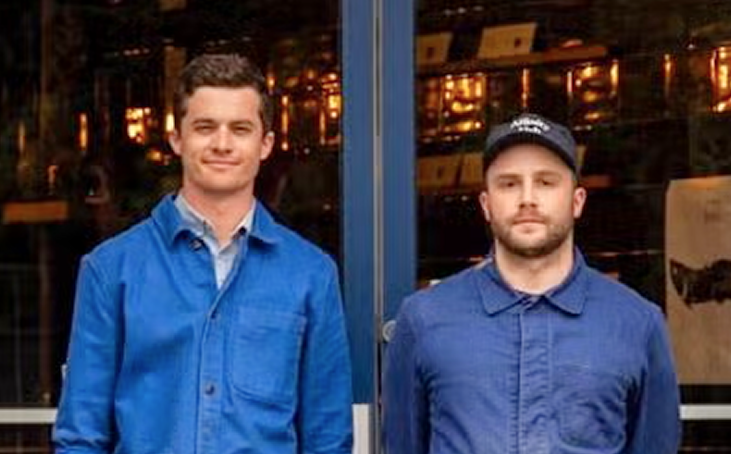
    Matthew Taylor & Jon Klip
    Affinity Fish

    Chefs and Fishmongers Matt Taylor & Jon Klip, co-owners of Toronto's Affinity Fish, bring experience from fine dining kitchens across Japan and North America, including Michelin-starred Shoushin and Restaurant Pearl Morissette. When sourcing their catch, they work directly with indigenous fisheries in Canada's Great Lakes and champion delicious, abundant alternatives to farmed salmon, such as whitefish, burbot, and cisco.

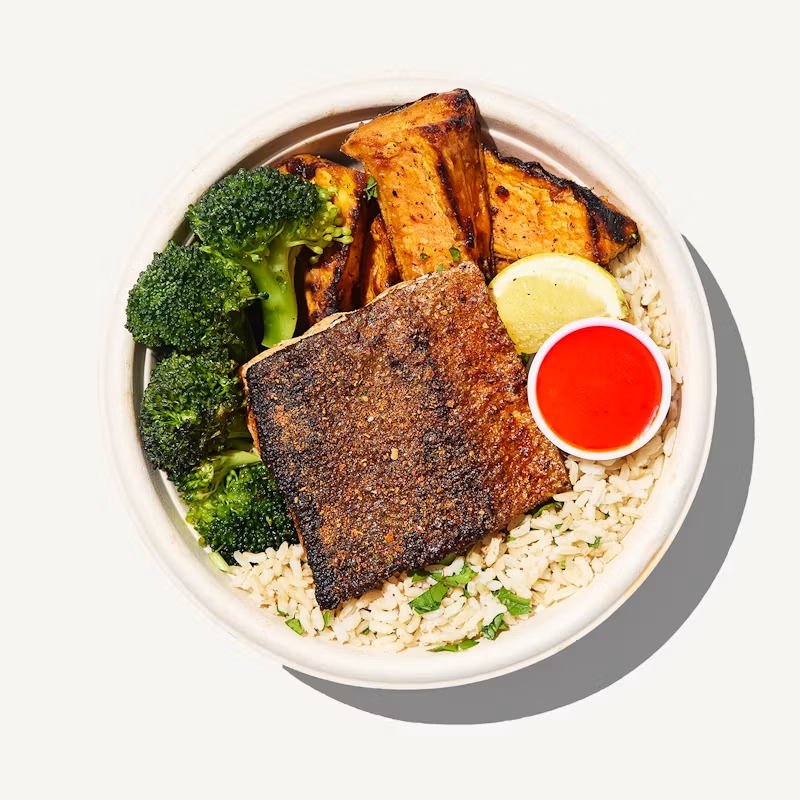
    Dig Inn
    Northeastern United States

    The ingredient-forward chain serves wild-caught salmon in all 35 of its restaurants, adding, “We support local Alaskan fishermen doing their best to bring the most sustainable salmon, and help protect the Alaskan and Northern Pacific foodshed.”

    Alice Waters photograph

    This is not about simply replacing ocean-farmed salmon with expensive wild salmon. It is about eating in harmony with nature. That will not always be salmon, but it can be delicious and available to all.

    Alice Waters

    Chef, author, and founder of Chez Panisse
    Francis Mallmann photograph

    I stopped using farmed salmon in my restaurants in 2013, and since then we have been working to prevent the creation of new farming areas around the world.

    Francis Mallmann

    Chef, author, and restaurateur

    Dan Barber photograph

    The problems with ocean-farmed salmon are well-documented. It’s a wretched operation… We can and should do better for our taste buds and the environment.

    Dan Barber

    Chef and founder of Blue Hill at Stone Barns

    Dear Chefs,

    To Our Fellow Chefs:

    Nobody ordered this.

    Salmon was once cooked seasonally. Wild salmon returned from the sea to rivers in such numbers that the water seemed alive with them. Yet since the 1970s, many wild salmon populations have collapsed by 80% or more. Wild Atlantic salmon in particular could disappear in our lifetime.

    The loss is easy to miss. Salmon has never seemed more abundant.

    But this abundance is manufactured, and it comes at a great cost. Today, 99% of Atlantic salmon served in restaurants and grocery stores is raised in industrial sea cages, often in the same waters wild salmon must pass through to survive.

    Ocean-farmed salmon has become one of the greatest threats to wild salmon’s future.

    Because these crowded cages are open, they pollute surrounding waters; waste does not stay contained. Nor do sea lice parasites, disease, or chemical treatments. Sea lice spread from farms to vulnerable young wild salmon. When nets break, farmed fish escape and breed with wild salmon, weakening the genetic inheritance they depend on to survive.

    The impact extends beyond the cages. Feeding one ocean-farmed salmon requires hundreds of ground-up wild fish that marine life and vulnerable subsistence communities depend on.

    Then there is the product itself. Its color is synthetic, engineered to match the pink we expect, and it has been marketed with unjustified claims of sustainability.

    Ocean-farmed salmon should never have existed at this scale. Not when the cost is wild salmon and all that depends on them.

    Empty rivers mean less food for bears, eagles, and otters — and traditions lost before they can be passed down.

    Communities seeing these effects firsthand are already taking a stand.

    Chefs can too. We commit to not serve ocean-farmed salmon until the industry can operate without causing this harm. And we are asking chefs and restaurants around the world to join us.

    Our decisions shape what diners value, what suppliers prioritize, and ultimately which foods — and species — survive.

    Every menu is a choice about what belongs on our tables. Ocean-farmed salmon does not — not as long as it continues to cause this kind of harm.

    Let’s take it off the table.

    With hope.

    Salmon are a keystone species our world can’t lose.

    A keystone species is one that holds entire ecosystems together. When salmon decline, predators starve, rivers lose nutrients, and forests stop thriving.

    Right now, wild Atlantic salmon populations are being pushed toward collapse, and ocean farms are a contributing factor.9 These farms spread disease, pollution, and genetic harm.14 If we lose salmon, we lose the backbone of some of the planet’s most critical ecosystems.
    80%
    decline in Wild Atlantic
    salmon populations since 1974.
    Add your name
    Right blue arrow

    Here’s the hopeful truth

    Together, we can create a better system so salmon, oceans, and communities can all thrive.

    Wild salmon rebound quickly when we give them the chance. In places where industrial sea cages have been removed, salmon runs have surged within just a few years. Restoring this keystone species isn't a dream. It's possible, and it’s a choice.

    Chefs help shift consumer demand by taking salmon off the table and introducing alternatives that are not depleting our oceans or harming ecosystems.

    Join us in creating a sustainable seafood future that restores ocean health, protects the environment, and nourishes communities around the world.

    Sources

     1 Thorstad, E.B. and B. Finstad. 2018. Impacts of salmon lice emanating from salmon farms on wild Atlantic salmon and sea trout. NINA Report 1449: 1-22. https://wildfish.org/wp-content/uploads/2022/06/Thorstad-Finstad-2018-Impacts-of-salmon-lice-NINA-Report-1449-2.pdf
    2Fuhong, D., Gagné, N., Ditlecadet, D., Quinn, B.K, McKindsey, C.W., & Trudel, M. 2026. Modelling the potential exposure of Atlantic Salmon post-smolts to the infectious salmon anemia virus during simulated outbreaks at salmon farms. Canadian Journal of Fisheries and Aquatic Sciences. 83: 1-21. https://doi.org/10.1139/cjfas-2025-0040
    3 Bolstad, G. H., Karlsson, S., Hagen, I. J., Fiske, P., Urdal, K., Sægrov, H., Florø-Larsen, B., Sollien, V. P., Østborg, G., Diserud, O. H., Jensen, A. J., & Hindar, K. (2021). Introgression from farmed escapees affects the full life cycle of wild Atlantic salmon. Science Advances, 7(52), eabj3397. https://www.science.org/doi/10.1126/sciadv.abj3397
    4Olsvik, P., Larsen, A., Berntssen, M., Goksøyr, A., Karlsen, O., Yadetie, F., Sanden, M., & Kristensen, T. (2019). Effects of agricultural pesticides in aquafeeds on wild fish feeding on leftover pellets near fish farms. Frontiers in Genetics, 10, 794. https://www.frontiersin.org/journals/genetics/articles/10.3389/fgene.2019.00794/full  
    5 Abihssira-García, I., Kögel, T., Gomiero, A., Kristensen, T., Krogstad, M., Olsvik, P. (2022). Distinct polymer-dependent sorption of persistent pollutants associated with Atlantic salmon farming to microplastics. https://www.sciencedirect.com/science/article/pii/S0025326X22004763?via%3Dihub 
    6 Ortiz-Severín, J., Hodar, C., Stuardo, C., Aguado-Norese, C., Maza, F., González, M. Cambiazo, V. (2024). Impact of salmon farming in the antibiotic resistance and structure of marine bacterial communities from surface seawater of a northern Patagonian area of Chile. https://link.springer.com/article/10.1186/s40659-024-00556-4#citeas#page=1
    7 Compassion in World Farming (CiWF). (2023). Rethinking aquaculture: For people, animals and the planet (est. ~440 wild fish per farmed salmon), as reported by Fish Farming Expert. https://www.fishfarmingexpert.com/compassion-in-world-farming-feed-salmon/salmon-farmers-defend-responsible-use-of-wild-fish-in-feed/1727087 
    8 Feedback (Foodrise). (2024, January). Blue empire: How the Norwegian salmon industry extracts nutrition and undermines livelihoods in West Africa. https://foodrise.eu/research/blue-empire-how-the-norwegian-salmon-industry-extracts-nutrition-and-undermines-livelihoods-in-west-africa/ 
    9 Dempson, J. B., Van Leeuwen, T. E., Bradbury, I. R., Lehnert, S. J., Coté, D., Cyr, F., Pretty, C., & Kelly, N. I. (2024). A review of factors potentially contributing to the long-term decline of Atlantic salmon in the Conne River, Newfoundland, Canada. Reviews in Fisheries Science & Aquaculture, 32(3), 479-504. https://www.tandfonline.com/doi/full/10.1080/23308249.2024.2341023
    10 ICES (International Council For the Exploration of the Sea). (2026). Working Group on North Atlantic Salmon (WGNAS). https://acrobat.adobe.com/id/urn:aaid:sc:US:acf36b4c-8676-4ceb-a4d5-3751d9d22a2d?viewer%21megaVerb=group-discover 
    11 Forseth, T., Thorstad, E., Fiske, P. (2025). Status of wild Atlantic salmon in Norway 2025. Norwegian Scientific Advisory Committee for Atlantic Salmon. https://www.vitenskapsradet.no/Portals/vitenskapsradet/Pdf/Status%20of%20wild%20Atlantic%20salmon%20in%20Norway%202025.pdf 
    12 Zhu, Y., Li, X., & Wu, S. (2025). Biological function of astaxanthin and its application in aquatic animal feeding. Food Chemistry: X, 32, Article 103319 https://pubmed.ncbi.nlm.nih.gov/41404045/ 
    13 Nair, A., Ahirwar, A., Singh, S., Lodhi, R., Lodhi, A., Rai, A., Jadhav, D. A., Harish, Varjani, S., Singh, G., Marchand, J., Schoefs, B., & Vinayak, V. (2023). Astaxanthin as a king of ketocarotenoids: Structure, synthesis, accumulation, bioavailability and antioxidant properties. Marine Drugs, 21(3), Article 176. https://www.mdpi.com/1660-3397/21/3/176 
    14Norwegian Salmon Rivers, Norwegian Association of Hunters and Anglers, Norwegian Friends of the Earth, & Sabima. (2023). Environmental impact from salmon farming (Letter to the EFTA Surveillance Authority). https://naturvernforbundet.no/content/uploads/2023/06/Impact_from_salmon_farming__May-2023__Letter-from-Sabima-and-other_Norwegian_NGOs.pdf
    Excerpt from SUPERFISH: SALMON. Courtesy of Wild Logic, LLC. Used with permission © Wild Logic, LLC. Cinematography by Rick Rosenthal, Veiga Grétarsdóttir and Arnt Mollan. Graphics by Tim Davison.